Pandi Muni — The Tamil Folk Guardian Deity of Madurai and His Complete History
Pandi Muni is a Tamil folk guardian deity worshipped mainly in Madurai and its surrounding regions. His worship belongs to the long-standing Tamil tradition of Kaval Deivams — village guardian deities believed to protect land, people, and moral order.
This complete guide explores the origin, temple significance, iconography, worship practices, beliefs, and modern relevance of Pandi Muni — carefully compiled for devotees and spiritual seekers following Tamil folk traditions.

Store passwords, IDs, documents and private information securely on your phone. No cloud. No tracking.
Origin and Historical Belief
According to traditional belief, the worship of Pandi Muni began around two centuries ago. A couple named Valliyammal and Periyasamy, belonging to the Mutharaiyar community, migrated from Karur to Madurai.
While traveling, night fell before they could reach the city, and they decided to rest at a place called Melamadai, near the present-day Mattuthavani area.
That night, Valliyammal had a powerful dream. In her dream, a bearded sage appeared and revealed his identity. He said that he was Pandiyan Nedunchezhiyan, the ancient ruler of Madurai. He explained that due to the grave injustice committed against Kovalan, the husband of Kannagi, he had been reborn and was performing deep penance at that very place, buried eight feet underground, as an act of atonement.
The sage further told her that if he was retrieved from the earth and worshipped, he would protect and uplift their family.
The Origin of Pandi Muni Worship
His story firmly links the deity with Madurai, justice, repentance, and protection.

When Valliyammal shared this dream with her husband, they dug at the spot and discovered a buried idol. This idol later came to be worshipped as Pandi Muni, and the place became an important center of devotion.
This event is regarded as the origin of Pandi Muni worship, and it firmly links the deity with Madurai, justice, repentance, and protection.
Store passwords, IDs, documents and private information securely on your phone. No cloud. No tracking.
Temple Location and Significance
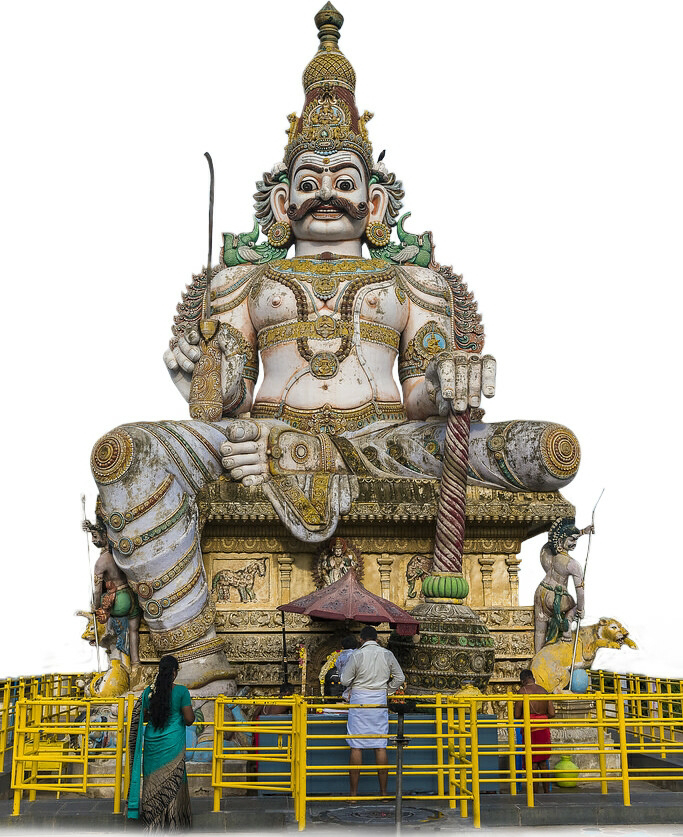
The main Pandi Muni shrine is traditionally associated with the Melamadai–Mattuthavani region of Madurai.
Like most folk guardian temples, it is not located within a large temple complex. Instead, it stands in an open or semi-open space, reflecting his role as a boundary and protector deity.
Pandi Muni temples are commonly found:
- Near village boundaries
- Along old travel routes
- Close to agricultural lands
- At road junctions
These locations symbolize his duty of guarding entrances and exits rather than residing within the village interior.

Deity Form and Representation
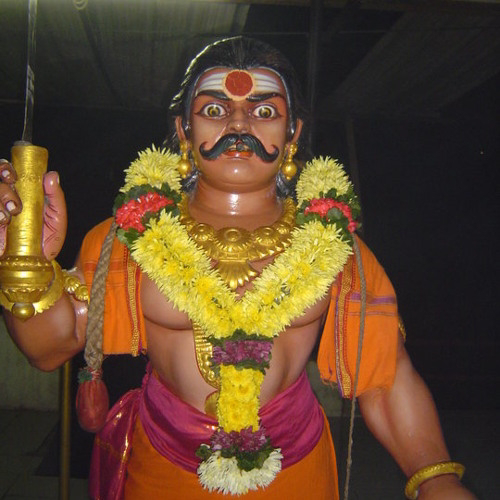
Pandi Muni is usually depicted in a fierce guardian form. He is shown with a thick moustache, intense eyes, and often holding weapons such as a sword or aruval.
In some shrines, there may not be a fully sculpted idol. Instead, a stone, symbolic weapon, or simple figure is worshipped.
This simplicity reflects the non-Agamic, folk-based nature of his worship.
Role as a Guardian Deity
Pandi Muni is believed to function as:
- A protector of village boundaries
- A guardian of travelers and farmers
- An enforcer of justice
- A deity who punishes falsehood and wrongdoing
Unlike major Hindu gods worshipped for prosperity or salvation, Pandi Muni is approached mainly for safety, justice, and protection from harm.
Worship Practices and Pooja
Pandi Muni worship is simple and direct, without elaborate rituals. Common offerings include:
- Pongal
- Coconut
- Lemon
- Flowers
- Camphor and incense
Special worship is usually performed on Tuesdays, Fridays, and Amavasya (new moon days). Local festivals are organized by village communities, and the temple is maintained collectively by devotees.
In earlier times, some regions followed traditional folk offerings, but many temples today follow symbolic or vegetarian practices.
Mantra and Devotional Chant
There is no classical Sanskrit mantra specifically prescribed for Pandi Muni. Devotees traditionally chant simple Tamil prayers.
A commonly recited chant is:
Protect us and guard our family
This invocation is believed to offer protection during travel, remove fear, and ensure safety.

Beliefs Associated with Pandi Muni
Strong beliefs surrounding Pandi Muni include:
- False vows made before him bring consequences
- Honest devotion brings protection
- Justice is delivered without delay
- He safeguards land and people from unseen dangers
Because of this, Pandi Muni is respected as a strict but fair deity.
Place Among Tamil Folk Deities
Pandi Muni is worshipped alongside other Tamil guardian deities such as Karuppusamy, Muniyandi, Sudalai Madan, and Madurai Veeran. Together, they form a protective spiritual framework around villages and farmlands.
Pandi Muni in Present Times
Even today, belief in Pandi Muni remains strong in Madurai and nearby districts. Travelers pray before long journeys, farmers worship him before harvest, and families seek his protection against injustice and harm.
Despite urban growth and modernization, the worship of Pandi Muni continues as a living folk tradition rooted in faith and place.
Pandi Muni represents justice, repentance, and protection. His history, rooted in the legend of Pandiyan Nedunchezhiyan's atonement, gives him a unique place among Tamil folk deities.
Worshipped not for grandeur but for guardianship, Pandi Muni remains an enduring spiritual protector of Madurai.
Store passwords, IDs, documents and private information securely on your phone. No cloud. No tracking.
Frequently Asked Questions About Pandi Muni
Who is Pandi Muni?
Pandi Muni is a Tamil folk guardian deity worshipped mainly in Madurai and its surrounding regions. He belongs to the tradition of Kaval Deivams — village guardian deities believed to protect land, people, and moral order.
How did Pandi Muni worship begin?
According to tradition, a couple named Valliyammal and Periyasamy from the Mutharaiyar community migrated from Karur to Madurai around two centuries ago. At Melamadai, Valliyammal had a dream in which Pandiyan Nedunchezhiyan revealed himself as performing penance eight feet underground. They later discovered an idol at that spot, which became the origin of Pandi Muni worship.
Why is Pandi Muni worshipped?
Pandi Muni is worshipped for safety, justice, and protection from harm. He is considered a strict but fair deity who punishes falsehood and safeguards land, people, and travelers from unseen dangers.
Where is the main Pandi Muni temple?
The main Pandi Muni shrine is traditionally associated with the Melamadai–Mattuthavani region of Madurai. Like other folk guardian temples, it is usually located near village boundaries, travel routes, agricultural lands, or road junctions.
What are common offerings to Pandi Muni?
Common offerings include pongal, coconut, lemon, flowers, camphor, and incense. Special worship is performed on Tuesdays, Fridays, and Amavasya (new moon days).
What is the main mantra for Pandi Muni?
There is no classical Sanskrit mantra specifically prescribed for Pandi Muni. Devotees traditionally chant simple Tamil prayers such as “Om Sri Pandi Muniye Potri” for protection during travel and to remove fear.
What does Pandi Muni symbolize?
Pandi Muni represents justice, repentance, and protection. His story of Pandiyan Nedunchezhiyan's atonement gives him a unique place among Tamil folk deities.
Is Pandi Muni still worshipped today?
Yes. Even today, belief in Pandi Muni remains strong in Madurai and nearby districts. Travelers pray before long journeys, farmers worship him before harvest, and families seek his protection against injustice and harm.
Conclusion — The Enduring Protector of Madurai
Pandi Muni represents justice, repentance, and protection. His history, rooted in the legend of Pandiyan Nedunchezhiyan's atonement, gives him a unique place among Tamil folk deities.
Worshipped not for grandeur but for guardianship, Pandi Muni remains an enduring spiritual protector of Madurai.
May the blessings of Pandi Muni bring protection, justice, and peace to all devotees.
Related Posts
❤️ Support Our Devotional Journey ❤️
This devotional space is created to share sacred mantras, divine stories, and spiritual knowledge with pure devotion and sincerity. All content is offered freely to help devotees find peace, faith, and inner strength through spirituality.
If you feel spiritually connected or benefited by our devotional posts, you may choose to support this journey. Your support encourages us to continue sharing meaningful devotional content for everyone.
Support this Devotional WebsiteDisclaimer
The content published in this post, including mantras, meanings, benefits, and spiritual explanations, is shared solely for devotional, educational, and informational purposes. The information is based on traditional beliefs, commonly available spiritual references, and AI-assisted content generation.
While every effort is made to present the content respectfully and accurately, the author does not claim absolute correctness or completeness of the information. This content does not guarantee any specific results and must not be considered professional advice, including medical, psychological, legal, financial, or astrological advice.
The author and publisher shall not be held responsible or liable for any direct, indirect, incidental, or consequential outcomes arising from the reading, interpretation, or practice of the content shared here.
Spiritual outcomes and personal experiences may vary based on individual faith, intention, discipline, and belief. Readers are advised to apply their own judgment and discretion while following any devotional or spiritual practice.
By accessing or using this content, you acknowledge and agree that you are solely responsible for your interpretations, actions, and decisions.




Comments
Post a Comment