Munishwaran — The Village Guardian Deity of South India | History, Worship & Traditions

Munishwaran is a widely worshipped folk guardian deity in South India, especially in Tamil Nadu. He is traditionally believed to protect villages, boundaries, and families from negative influences.
In many folk traditions, Munishwaran is associated with Lord Shiva and is worshipped in open shrines, village temples, and roadside sanctums. Devotees offer prayers seeking protection, justice, and peace in daily life.
This complete guide explores the origins, traditions, forms, worship practices, and spiritual significance of Munishwaran — the fierce, protective force that has watched over Tamil villages for generations.
Store passwords, IDs, documents and private information securely on your phone. No cloud. No tracking.
Who Is Munishwaran?
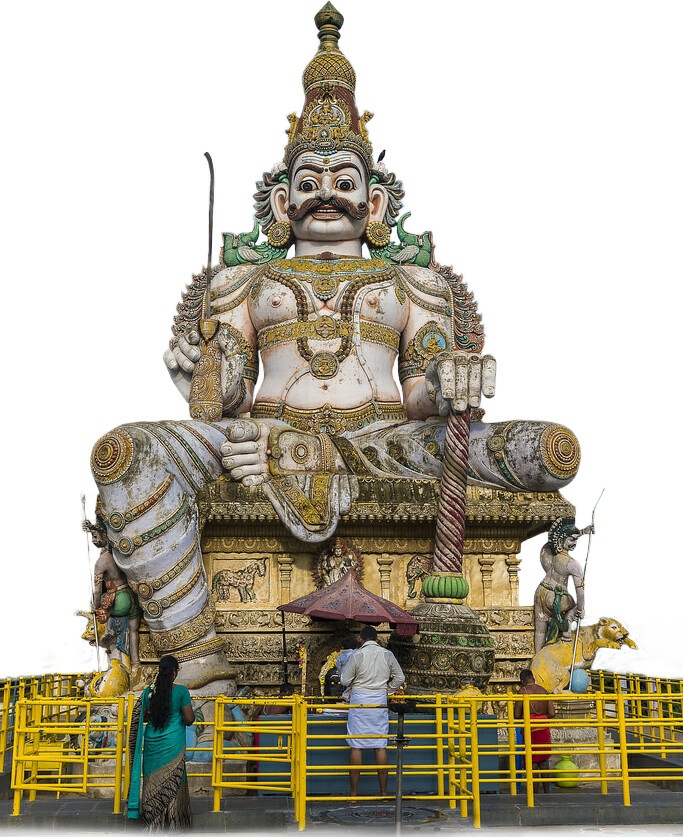
Munishwaran is a widely worshipped folk guardian deity in South India, especially in Tamil Nadu. He is traditionally believed to protect villages, boundaries, and families from negative influences. Unlike the major deities enshrined inside grand temples, Munishwaran is most often worshipped in open shrines and roadside sanctums — a reflection of his role as a guardian who watches over the community at all times.
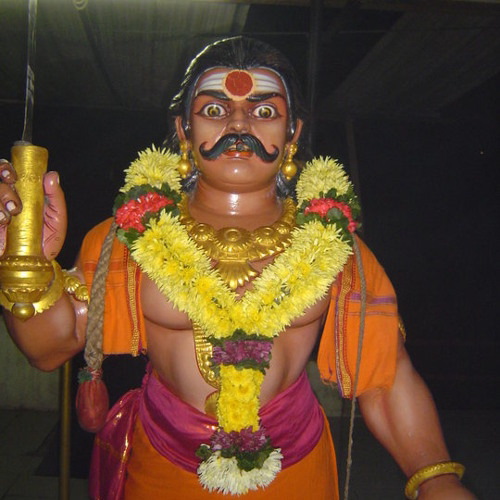
His fierce appearance — with a large moustache, powerful build, and weapons such as the trident, sickle, and mace — is not meant to frighten devotees but to signal his readiness to protect them from evil forces. In many folk traditions, Munishwaran is associated with Lord Shiva and is considered a manifestation of Shiva's protective energy.
Names and Forms of Munishwaran
Munishwaran is known by many names across Tamil Nadu and the Tamil diaspora. Each name reflects a different aspect of his divine personality and a different regional tradition:
The most common Sanskritized form, meaning "Lord of Sages." Used widely in Tamil Nadu and Malaysia.
A familiar Tamil name used in rural devotional songs. Often used affectionately by village communities.
Meaning "Father Muni," expressing affectionate devotion. Common in South Tamil Nadu.
A respectful term meaning "Lord." Used by devotees as a mark of deep reverence.
The form with matted hair, associated with Lord Shiva. Worshipped for removal of enemies and misfortune.
The popular spelling used in Tamil Nadu and Malaysia. Also spelled Muniswaran, Munishwaran, or Muniswami.
Traditional Beliefs
Munishwaran is worshipped as a guardian deity who watches over villages and devotees. Folk traditions vary by region, and practices differ across communities.
According to traditional beliefs, Munishwaran is one of the few deities who responds immediately to the prayers of his devotees. He is believed to:
- Protect the village from dangers, thieves, and negative forces
- Watch over families and children
- Uphold justice and truth
- Punish those who harm others or speak falsely
- Guard travellers on roads and at night
- Bring peace and prosperity to those who honour him
Connection with Lord Shiva
In many folk traditions, Munishwaran is associated with Lord Shiva. He is often described as a manifestation of Shiva's protective energy, appearing in a fierce form to guard the community. Some traditions consider him a member of Shiva's retinue (Gana), one of the seven emanations created from Shiva's face who promised to guard the Dravidian goddesses.
His appearance reflects this Shiva connection — the holy ash (vibhuti) smeared on his body, his fierce aspect, and his weapons all echo the iconography of Lord Shiva himself.
Role as Village Guardian
In olden days, villages did not have police stations or modern security systems. People depended on faith and discipline to maintain order. Munishwaran was believed to be the divine force that guarded the village boundaries, especially during the night.
His traditional role includes:
Villagers believed that wrongdoers would think twice before harming others because Munishwaran was always watching. This belief helped people live honestly and peacefully.
Store passwords, IDs, documents and private information securely on your phone. No cloud. No tracking.
Worship Practices
Worship of Munishwaran is usually simple and sincere. Devotees offer prayers seeking protection, justice, and peace in daily life. Common practices include:
- Visiting the shrine on Tuesdays, Fridays, and Sundays
- Lighting oil lamps
- Offering flowers, coconuts, and bananas
- Breaking coconuts to symbolise breaking the ego
- Offering camphor, sandalwood, and incense
- Preparing Pongal as a communal offering
- Praying silently with honest intentions
- Offering special padayal during festivals and family functions
People believe Munishwaran responds quickly when prayers are made with truth and respect. The simplicity of the worship reflects the accessible nature of the deity — no elaborate priesthood or expensive rituals are required, only a sincere heart.
Where Munishwaran Is Worshipped
Munishwaran's worship is deeply rooted in Tamil culture and has spread far beyond the villages of Tamil Nadu. He is worshipped across:
The heartland of Munishwaran worship. From village borders to roadside shrines across the state.
Worshipped by Tamil communities with traditional practices maintained across generations.
The deity was brought from Tamil Nadu to Malaya more than 170 years ago by Tamil migrants.
Home to major Munishwaran temples that serve the Tamil Hindu community. Worship has developed strong local traditions.
Worshipped by Tamil communities who migrated with their family deities.
Wherever Tamil communities have settled — Australia, UK, USA, Canada — Munishwaran is honoured as the family protector.
Munishwaran in the Tamil Diaspora
Munishwaran's cult travelled abroad with Tamil migrants, and today he is worshipped in countries such as Malaysia, Singapore, Indonesia, Fiji, and Sri Lanka. The deity, brought from Tamil Nadu to Malaya more than 170 years ago, has developed a powerful appeal for young Singaporean Hindus three and four generations removed from their Indian origins.
Most Munishwaran temples in Malaysia and Singapore were initially set up by immigrants from Thanjavur, Thiruvarur, and Nagapattinam districts of Tamil Nadu. These early Tamil migrants brought their family deities with them, and the worship of Munishwaran became a central part of their religious life in the new land.
In the diaspora, Munishwaran temples serve as centres of Tamil cultural and religious identity, maintaining traditions that remain village-based in India.
Frequently Asked Questions
Who is Munishwaran?
Munishwaran is a widely worshipped folk guardian deity in South India, especially Tamil Nadu. He is believed to protect villages, boundaries, and families from negative influences. He is traditionally associated with Lord Shiva and is worshipped in open shrines, village temples, and roadside sanctums.
Why is Munishwaran called a Kaval Deivam?
Kaval Deivam means "guardian deity" in Tamil. Munishwaran is called this because his primary role is to guard the village boundaries — especially at night. His shrine is traditionally placed at the edge of the village, where he watches over all who enter and leave.
What are the other names of Munishwaran?
Munishwaran is also known as Muneeswarar, Muniyandi, Muniyappan, Muni Ayya, Muniswaran, and Jada Muni. Each name reflects a different aspect of his divine personality and regional tradition.
Why is Munishwaran worshipped in open places?
Unlike gods worshipped mainly inside enclosed temples, Munishwaran is often worshipped in open places — at village borders, under sacred trees, and along roadsides. This reflects his traditional role as a guardian who watches over the community at all times.
What is Munishwaran's connection with Lord Shiva?
In many folk traditions, Munishwaran is associated with Lord Shiva and is considered a manifestation of Shiva's protective energy. His appearance — with holy ash smeared on his body, his fierce aspect, and his weapons — echoes the iconography of Lord Shiva himself.
Which day is best for Munishwaran worship?
Tuesdays, Fridays, and Sundays are considered especially auspicious for Munishwaran worship. Devotees also visit his shrines on Ammavasai (New Moon) and during Aadi month Fridays.
What offerings are made to Munishwaran?
Common offerings to Munishwaran include coconuts, bananas, flowers, camphor, sandalwood, and oil lamps. Devotees also prepare Pongal as a communal offering. The breaking of coconuts symbolises the breaking of the ego.
Where is Munishwaran worshipped outside India?
Munishwaran is worshipped in Sri Lanka, Malaysia, Singapore, Mauritius, and in Tamil diaspora communities worldwide. The deity was brought to Malaysia and Singapore more than 170 years ago by Tamil migrants and continues to be a central figure in diaspora Tamil religion.
What does Munishwaran teach his devotees?
Munishwaran teaches important values such as speaking the truth, keeping promises, avoiding cheating and injustice, and living with discipline, honesty, and respect. His presence at the village border is not just about physical protection — it is about protecting the moral fabric of the community.
Final Thoughts — The Silent Protector of Village Life
For devotees, Munishwaran is not just a god at the village border. He is a silent protector who watches over daily life. People feel his presence when they travel safely, when problems reduce, and when justice slowly comes in their favour.
Worship of Munishwaran is about living with discipline, honesty, and respect. That is why even today, many people trust Munishwaran and continue to pray with deep belief and faith. From the rural heartlands of Tamil Nadu to the bustling streets of Chennai, Singapore, and Malaysia, his presence is felt by millions who seek his protection and guidance.
May his protective presence watch over you and your loved ones always. Om Sri Munishwaraya Namaha! 🙏
Store passwords, IDs, documents and private information securely on your phone. No cloud. No tracking.
Related Devotional Posts
❤️ Support Our Devotional Journey
This devotional space is created to share sacred mantras, divine stories, and spiritual knowledge with pure devotion and sincerity. All content is offered freely to help devotees find peace, faith, and inner strength through spirituality.
If you feel spiritually connected or benefited by our devotional posts, you may choose to support this journey. Your support encourages us to continue sharing meaningful devotional content for everyone.
Support this Devotional Website
Disclaimer
The content published in this post, including mantras, meanings, benefits, and spiritual explanations, is shared solely for devotional, educational, and informational purposes. The information is based on traditional beliefs, commonly available spiritual references, and AI-assisted content generation.
While every effort is made to present the content respectfully and accurately, the author does not claim absolute correctness, completeness, or guaranteed outcomes. This content must not be considered professional advice, including medical, psychological, legal, financial, astrological, or religious guidance.
The author and publisher shall not be held responsible or liable for any direct, indirect, incidental, or consequential outcomes arising from the reading, interpretation, or practice of the content shared on this website.
Spiritual results and personal experiences may vary depending on individual faith, belief, intention, discipline, and consistency of practice. Readers are advised to use their own judgment and discretion.
By accessing or using this content, you acknowledge and agree that you are solely responsible for your interpretations, actions, and decisions.




Comments
Post a Comment