Karuppasamy — The Fierce Village Guardian Deity of Tamil Tradition
Karuppasamy is one of the important village guardian deities found in Tamil religious traditions. In many villages, he is worshipped as a kaval deivam, a deity associated with protecting the village, its people and its sacred boundaries.
The worship of Karuppasamy has a strong connection with Tamil folk and village traditions. His shrines, forms of worship, names and stories can differ from one place to another. Therefore, there is no single version of every Karuppasamy tradition that applies to all villages.
This complete guide explores who Karuppasamy is, the meaning of his name, his role as a village guardian, his connection with Ayyanar, his common forms and the importance of Karuppasamy worship in Tamil culture — carefully compiled for devotees and spiritual seekers.

Store passwords, IDs, documents and private information securely on your phone. No cloud. No tracking.
Who Is Karuppasamy?
Karuppasamy, also known by names such as Karuppar, Karuppannasamy and Karuppaswamy, is traditionally worshipped as a guardian deity in parts of Tamil Nadu and in Tamil communities elsewhere.
He is commonly associated with the idea of protection and with the boundaries of a village or sacred space. This is why Karuppasamy shrines are often found near village entrances, boundaries or alongside other guardian deities.
In Tamil village traditions, a guardian deity is not simply associated with a particular temple building. The deity may also have a close relationship with the land, village community and local customs.
Meaning of the Name Karuppasamy
The name Karuppasamy is commonly understood from the Tamil words karuppu and samy. Karuppu refers to black or dark, while samy is a respectful term used for a deity or lord.
The name is closely connected with the way Karuppasamy is traditionally represented in many places. However, the meaning of a deity's name should not be taken as a complete explanation of the deity's history because local traditions contain their own stories and interpretations.
Karuppu (black/dark) + Samy (lord) — The Black God who protects.
Karuppasamy as a Village Guardian Deity
One of the most important aspects of Karuppasamy worship is his role as a guardian deity.
In traditional Tamil village settings, the boundary of a settlement has an important cultural and religious meaning. Guardian deities may be worshipped at these boundaries as protectors of the community.
Karuppasamy is therefore often associated with protection, courage, justice and the safeguarding of the village.
The exact beliefs connected with his protective role vary between temples and communities. Some traditions place particular emphasis on justice and truth, while others focus more strongly on the protection of the village and its people.
Store passwords, IDs, documents and private information securely on your phone. No cloud. No tracking.
Karuppasamy and Ayyanar
Karuppasamy is frequently associated with Ayyanar in Tamil village deity traditions.
In some traditions, Karuppasamy is described as an attendant or guardian associated with Ayyanar. In other places, Karuppasamy is worshipped independently as the principal guardian deity of a particular shrine or village.
Because village traditions differ from one region to another, the relationship between Ayyanar and Karuppasamy should be understood according to the customs of the particular temple.
You can also read our article about Jada Muni and explore other guardian and Muni traditions covered on this website.
How Karuppasamy Is Traditionally Represented
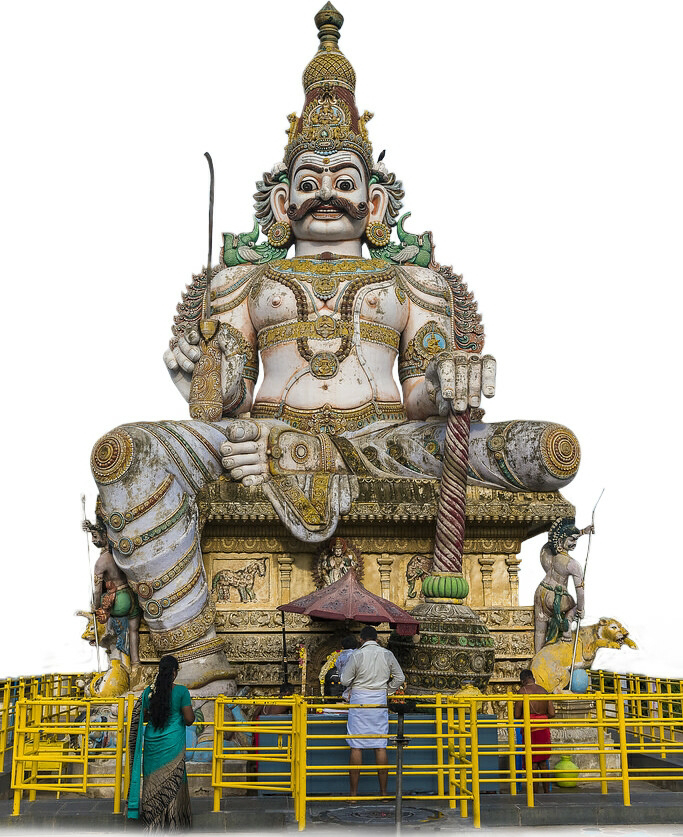
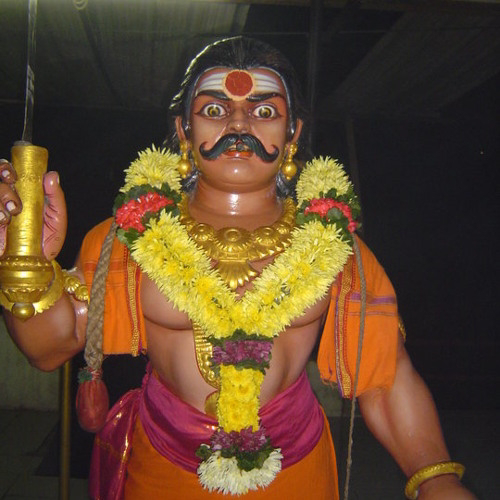
Karuppasamy is commonly represented as a strong and alert guardian figure. Traditional representations may include a large moustache and weapons such as an aruval, spear or staff.
Physical Form
A dark, muscular guardian figure with a thick moustache and an alert, protective posture.
Weapons
An aruval (curved sickle-sword), spear, mace or staff — symbolizing his role as a protector.
Vahana
Often depicted riding a white horse, representing swift action and readiness to defend.
Shrine Forms
Some shrines have sculpted images; others use simple stones or symbolic weapons.
These features are generally understood within the context of his guardian role. The visual form can vary considerably between temples and regions.
Different Names of Karuppasamy
Karuppasamy is known by different names and forms in different regions. The names used by devotees may depend on the local temple and community tradition.
- Karuppasamy — the most common name
- Karuppar — a respectful short form
- Karuppannasamy — the full traditional form
- Karuppaswamy — alternate spelling
- Periya Karuppar — the elder Karuppar
- Chinna Karuppar — the younger Karuppar
- Sangili Karuppar — the chained form
- Vettai Karuppar — the hunter form
The list should not be treated as a universal list of forms because names and classifications can vary between local traditions.
Karuppasamy Worship in Tamil Tradition
Karuppasamy worship is closely connected with local temple customs. Worship practices can differ significantly depending on the temple, village and family tradition.
Devotees may visit Karuppasamy shrines during ordinary prayer as well as during temple festivals and other important occasions.
Traditional worship can include lamps, flowers, cooked offerings and other offerings according to local custom. Some Karuppasamy temples also have festival practices that are specific to the particular community.
Because these practices are not identical everywhere, visitors should follow the customs of the particular temple rather than assuming that one form of worship applies to every Karuppasamy shrine.
Karuppasamy and the Idea of Justice
Karuppasamy is often associated with justice and truth in Tamil folk traditions.
This association is reflected in stories and local beliefs in which the deity is regarded as a guardian of fairness and an observer of promises or oaths.
These stories belong to the living folk traditions surrounding the deity, and their details can differ from village to village.
Karuppasamy Temple Festivals
Many village deity temples have annual festivals that bring together members of the local community.
Depending on the temple, a Karuppasamy festival may include special prayers, processions, traditional music, devotional songs and other community activities.
The timing and form of the festival are determined by local temple traditions. Some festivals may also be connected with the worship of other village guardian deities.
Store passwords, IDs, documents and private information securely on your phone. No cloud. No tracking.
Karuppasamy Devotional Songs
Karuppasamy has a large presence in Tamil devotional and folk music. Songs dedicated to Karuppasamy are available through different devotional music labels and YouTube channels.
You can also read our existing article about the Sambrani Vaasagare Karuppusamy Song.
Frequently Asked Questions About Karuppasamy
Who is Karuppasamy?
Karuppasamy is a Tamil village guardian deity, commonly worshipped as a kaval deivam. He is associated with protection, village boundaries and local traditions of justice.
What does Karuppasamy mean?
The name Karuppasamy is commonly explained from the Tamil words karuppu, meaning black or dark, and samy, a respectful term for a deity or lord.
Is Karuppasamy a village guardian god?
Yes. Karuppasamy is widely worshipped as a guardian deity in Tamil village traditions. His exact role and worship customs vary according to the local temple and community.
Is Karuppasamy related to Ayyanar?
In several Tamil village traditions, Karuppasamy is associated with Ayyanar and may be regarded as an attendant or guardian connected with Ayyanar. The relationship varies according to local tradition.
Where are Karuppasamy temples usually found?
Karuppasamy shrines may be found near village boundaries, entrances and other locations associated with the protection of the community. However, temple locations vary between regions.
What are the other names of Karuppasamy?
Karuppar, Karuppannasamy and Karuppaswamy are among the names used for the deity. Individual temples may also use names such as Periya Karuppar, Chinna Karuppar or other regional forms.
Are all Karuppasamy worship traditions the same?
No. Karuppasamy worship is strongly connected with local traditions. Stories, forms, temple customs, festivals and offerings may differ between villages and communities.
Are Karuppasamy and Munishwaran the same deity?
They are not automatically the same deity. Both are worshipped within Tamil village and guardian deity traditions, but individual temples may have different arrangements and local beliefs concerning their relationship.
Conclusion — The Fierce Guardian of Tamil Villages
Karuppasamy holds an important place in Tamil village deity traditions. As a kaval deivam, he is commonly associated with protection, village boundaries, justice and the safeguarding of the community.
The stories and worship practices connected with Karuppasamy vary from one region to another. Understanding these differences is important because village deity traditions are living traditions shaped by local communities.
Along with Munishwaran, Muniyandi, Ayyanar, Madurai Pandi Muni and other village deities, Karuppasamy is part of the rich devotional and cultural heritage of Tamil communities.
May the blessings of Karuppasamy bring protection, justice and peace to all devotees.
Related Village Deity Content
❤️ Support Our Devotional Journey ❤️
This devotional space is created to share sacred mantras, divine stories, and spiritual knowledge with pure devotion and sincerity. All content is offered freely to help devotees find peace, faith, and inner strength through spirituality.
If you feel spiritually connected or benefited by our devotional posts, you may choose to support this journey. Your support encourages us to continue sharing meaningful devotional content for everyone.
Support this Devotional WebsiteDisclaimer
The content published in this post, including spiritual explanations and traditional beliefs, is shared solely for devotional, educational and informational purposes. The information is based on traditional beliefs, commonly available spiritual references and AI-assisted content generation.
While every effort is made to present the content respectfully and accurately, the author does not claim absolute correctness or completeness of the information. Karuppasamy worship is a living regional tradition, and stories, names, forms and practices may vary between communities.
The author and publisher shall not be held responsible or liable for any direct, indirect, incidental or consequential outcomes arising from the reading, interpretation or practice of the content shared here.
Spiritual outcomes and personal experiences may vary based on individual faith, intention, discipline and belief. Readers are advised to apply their own judgment and discretion while following any devotional or spiritual practice.
By accessing or using this content, you acknowledge and agree that you are solely responsible for your interpretations, actions and decisions.




Comments
Post a Comment