Lord Ayyappa's 18 Sacred Names: Meaning and Spiritual Significance
The eighteen sacred names of Lord Ayyappa, each with its meaning and devotional significance. A simple guide for devotees — including how to use these names in daily prayer.
Lord Ayyappa is invoked by many names in Hindu devotional traditions. The number eighteen is especially significant in the Ayyappa tradition — it is the number of the sacred steps at Sabarimala (Pathinettam Padi). Devotees also commonly invoke eighteen sacred names of the Lord, each describing a different aspect of his form, qualities, and deeds.
The number eighteen holds a special place in the Ayyappa tradition because of the sacred Pathinettam Padi at Sabarimala. Inspired by this significance, this article brings together eighteen names and devotional epithets associated with Lord Ayyappa, along with their meanings and spiritual significance.
This is a devotional selection, not a fixed or universally recognised eighteen-name stotra. Lord Ayyappa is also worshipped through traditional namavalis containing many more names.
Whether you are observing the 41-day Vratham or simply seeking to deepen your devotion, these names are a simple and beautiful way to draw closer to Lord Ayyappa.

Who Is Lord Ayyappa?
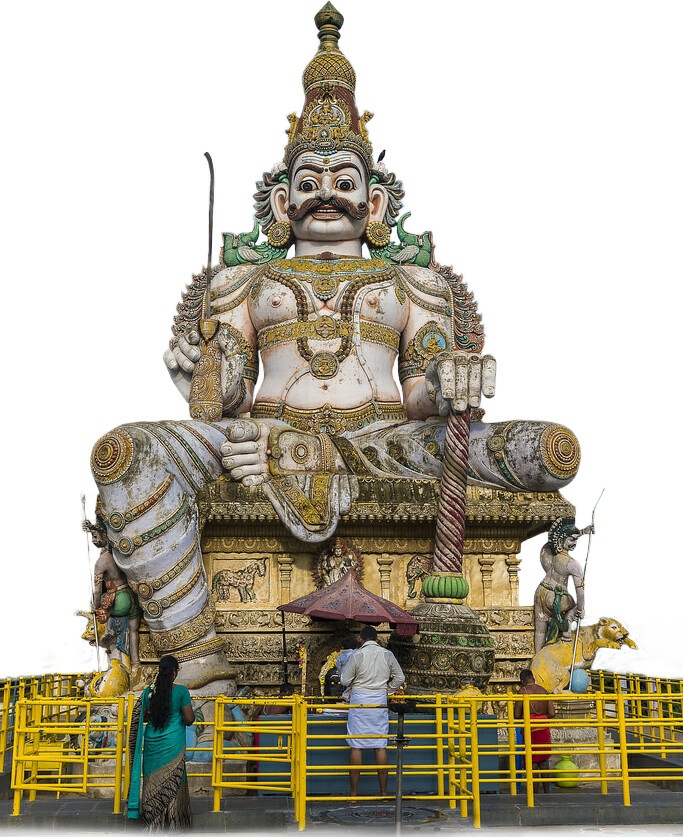
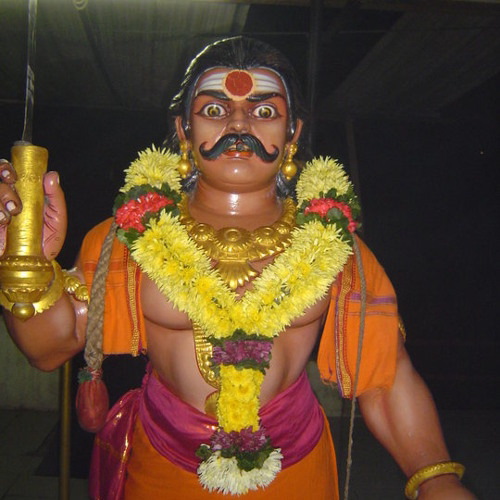
Lord Ayyappa is the presiding deity of Sabarimala in Kerala. He is revered as the son of Hari (Vishnu) and Hara (Shiva) — born of the union of Mohini, Vishnu's enchanting form, and Lord Shiva. He is also known as Shasta, the divine teacher and protector, and as Manikandan, the child who wore a gem around his neck.
Ayyappa is worshipped as a celibate deity, a symbol of renunciation, dharma, and compassion. His devotees undertake the 41-day Vratham, carry the Irumudi Kettu, and climb the eighteen sacred steps at Sabarimala to receive his darshan. Read more in our guide to the Ayyappa 41-Day Vratham and the meaning of Pathinettam Padi.
The 18 Sacred Names of Lord Ayyappa
Each name below describes one aspect of Lord Ayyappa — his origin, his qualities, his deeds, or his sacred places. Together, they form a beautiful garland of devotion. You can chant these names individually or as a sequence during prayer.
- Ayyappa — The primary name of the Lord. It combines Ayyan (respected lord) and appa (father), and is the name by which devotees call upon him most intimately.
- Manikandan — "One with a gem around the neck." Refers to the gem found around the child Ayyappa's neck when the Pandalam king discovered him. A deeply loved name.
- Harihara Putra — "Son of Hari (Vishnu) and Hara (Shiva)." This name recalls his divine parentage and his unique identity as the child of two great gods.
- Shasta — "The teacher" or "the ruler." Lord Ayyappa as the divine guide who teaches dharma and protects his devotees.
- Dharma Shasta — "Lord of dharma." The upholder of righteousness, who protects the good and corrects the erring.
- Mohini Putra — "Son of Mohini." Refers to his mother Mohini, the enchanting form of Vishnu.
- Shiva Nandana — "Son of Shiva." A name honouring his father, Lord Shiva.
- Pandala Rajakumara — "Prince of Pandalam." Refers to his earthly life as the adopted son of the Pandalam king.
- Sathya Shasta — "Shasta of truth." The Lord who embodies and protects truth (satya).
- Lokanatha — "Lord of the worlds." The supreme protector of all realms and beings.
- Bhutanatha — "Lord of beings." The Lord who presides over all created souls.
- Karunamaya — "Full of compassion." A name recalling his boundless mercy and tenderness toward devotees.
- Sharanagata Vatsala — "Loving to those who surrender." The Lord who warmly receives anyone who takes refuge in him — the heart of Ayyappa devotion.
- Veerappa — "The valiant Ayyappa." Recalls his victory over the demoness Mahishi, accomplished to restore dharma.
- Mahishi Mardhana — "Destroyer of Mahishi." Refers to his defeat of the demoness Mahishi, an act that freed the worlds from her tyranny.
- Sabarigirinatha — "Lord of Sabarigiri." Refers to Sabarimala, the sacred hill where his temple stands and where he grants darshan to devotees.
- Bhaktavatsala — "Affectionate to devotees." The Lord whose love for his devotees is the foundation of the entire Ayyappa tradition.
- Kalyana Shasta — "The auspicious Shasta." The Lord who brings auspiciousness and blessings to all who remember him.
How Devotees Use These Names in Prayer
These names can be woven into daily devotional practice in several simple ways:
- Japa: Choose one name, such as Manikandan or Sharanagata Vatsala, and repeat it gently as a mantra, using a mala if you wish.
- Bhajan singing: Many Ayyappa bhajans naturally weave these names together — for example, singing "Ayyappa, Manikandan, Harihara Putra" in sequence.
- Daily chanting: Recite the list of eighteen names each morning after bathing, as a short devotional offering.
- During the Vratham: While observing the 41-day Vratham, use these names as part of your daily prayer and reflection.
- Before sleep: Recall one name each night, letting its meaning settle in your heart.
There is no rigid rule requiring one specific method. The purpose of the names is to remember the Lord and to feel his presence. A sincere heart matters more than perfect pronunciation.
A Simple Daily Practice
If you would like to begin, here is a short daily practice built around the eighteen names:
- Bathe and sit quietly. Light a lamp before a picture of Lord Ayyappa.
- Begin with the principal mantra: Chant Swamiye Saranam Ayyappa nine times.
- Recall the names slowly. Speak each of the eighteen names aloud or in your mind, pausing briefly after each to reflect on its meaning.
- Close with gratitude. Offer a simple prayer of thanks.
- Conclude: Swamiye Saranam Ayyappa.
This practice takes only a few minutes but, over time, builds a strong and steady devotion.
Frequently Asked Questions
What are the 18 sacred names of Lord Ayyappa?
The eighteen names presented here are Ayyappa, Manikandan, Harihara Putra, Shasta, Dharma Shasta, Mohini Putra, Shiva Nandana, Pandala Rajakumara, Sathya Shasta, Lokanatha, Bhutanatha, Karunamaya, Sharanagata Vatsala, Veerappa, Mahishi Mardhana, Sabarigirinatha, Bhaktavatsala, and Kalyana Shasta. Each name reflects a different aspect of the Lord.
Is there an official list of 18 names in Hindu tradition?
The canonical Ayyappa stotra is the 108-name Ashtottara Shatanamavali, printed in standard parayana books. There is no single "official" eighteen-name list, but eighteen names are commonly invoked in devotional contexts because the number eighteen echoes the eighteen sacred steps at Sabarimala. The list above is a devotional selection widely used by devotees.
Which name of Ayyappa should I chant?
Any of these names can be chanted. Ayyappa and Swamiye Saranam Ayyappa are the simplest and most widely used. Manikandan, Harihara Putra, and Sharanagata Vatsala are also beloved for daily japa. Choose one that resonates with you and chant it consistently.
What does "Harihara Putra" mean?
"Harihara Putra" means "son of Hari (Vishnu) and Hara (Shiva)." It refers to Lord Ayyappa's birth from the union of Mohini (Vishnu's form) and Lord Shiva, making him the divine child of both great gods.
Can I chant these names without initiation?
Yes. Simple repetition of these names — especially Ayyappa and Swamiye Saranam Ayyappa — does not require formal initiation and can be done by any devotee. For the full 108-name namavali or more elaborate practices, guidance from a Guruswamy is traditionally recommended.
Why is the number 18 important in the Ayyappa tradition?
The number eighteen is significant because of Pathinettam Padi, the eighteen sacred steps at Sabarimala. The steps carry deep spiritual symbolism (overcoming the senses, emotions, and gunas). The tradition of eighteen names of the Lord echoes this same sacred number.
Conclusion: Names That Draw Us Closer
Each name of Lord Ayyappa is a door into a deeper relationship with him. Manikandan brings the tenderness of a child. Sharanagata Vatsala reminds us that surrender is met with love. Veerappa and Mahishi Mardhana recall his protective power. Sabarigirinatha calls us to the sacred hill where he waits.
You do not need to learn all eighteen at once. Begin with one. Let it become a friend on your tongue and a companion in your heart. Over time, the names will multiply naturally, and each will draw you closer to the Lord.
May Lord Ayyappa's names be your strength on the path.
Swamiye Saranam Ayyappa.
Related Devotional Posts
You may also like our other articles on Lord Ayyappa and Hindu devotional traditions.
Support Our Devotional Journey
This devotional space is created to share sacred knowledge and spiritual guidance with pure devotion and sincerity. All content is offered freely to help devotees find peace, faith, and inner strength.
If you feel spiritually connected or benefited by our posts, you may choose to support this journey. Your support encourages us to continue sharing meaningful devotional content.
Support this Devotional Website
Disclaimer
The content published in this post — including the eighteen names and their meanings — is shared solely for devotional, educational, and informational purposes. The information is based on traditional devotional usage and commonly available spiritual references.
Different communities and individuals may hold different views and practices. This content does not claim that one list or interpretation represents every devotee's belief and must not be considered professional advice, including religious or cultural guidance.
The author and publisher shall not be held responsible or liable for any outcomes arising from the reading, interpretation, or practice of the content shared here.
This article is presented with deep respect for the living faith and traditions of all devotees. If any information is found to be inaccurate or objectionable, kindly contact us for correction or removal.




Comments
Post a Comment