Keep your private life private.
Store passwords, IDs, documents and private information securely on your phone. No cloud. No tracking.
Lord Shiva is the heart of Indian spirituality. Known as Mahadeva (The Great God), he represents the supreme consciousness that governs the cycle of birth, death, and rebirth.
Lord Shiva has no birth and no death; he is eternal, beyond time, creation, and destruction.
In Hindu philosophy, Shiva is not just a person; he is the energy that remains when everything else is destroyed.

This guide explores the depths of his being, including his fierce village protectors like Lord Muneeswaran, his domestic life, his ancient history, and his modern relevance.
Who is Lord Shiva?
Lord Shiva is the third deity in the Trimurti. While Brahma creates the world and Vishnu preserves it, Shiva’s role is to destroy it at the end of each cosmic cycle.
This destruction is not evil, it is the necessary clearing of the old to make way for the new.
Imagine a farmer who burns a field after harvest. He isn't destroying the earth; he is preparing the soil for the next season.
That is the essence of Shiva. He is the ultimate yogi, the king of dancers, and the protector of the marginalized.
History and Ancient Origins
The history of Lord Shiva is a journey through time, merging the ancient Indus Valley traditions with the Vedic scriptures.
The Pre Vedic Root: Pashupati
Thousands of years ago, in the Indus Valley Civilization, archaeologists found the Pashupati Seal. It shows a figure in a yogic pose, wearing a horned headdress and surrounded by animals.
Many historians believe this is the earliest representation of Shiva as the Lord of Animals. This proves that Shiva worship predates almost every other organized religion.
The Vedic Rudra
In the Rig Veda, the oldest Hindu text, Shiva appears as Rudra, the Howler or the Storm God. Rudra was a fierce deity who lived in the mountains and controlled the winds and lightning.
Over time, the fierce Rudra softened into the benevolent Shiva, though he never lost his wild, untamable power.
The Emergence of Muneeswaran in Folk History
While the Puranas were being written in the North, a parallel history was forming in the South. This is where Lord Muneeswaran enters the timeline.
Folk history suggests that Shiva did not just stay in the high Himalayas. He manifested as the Muni to guard the common people.
In the South Indian tradition, Muneeswaran is considered an Amsam (a direct portion) of Shiva that emerged during the legendary Daksha Yagna.
When Shiva’s first wife, Sati, immolated herself, Shiva’s grief and rage took many forms. While Veerabhadra was created to destroy the sacrifice, Muneeswaran was created from Shiva’s face to protect the righteous souls and restore order.
This links Muneeswaran directly to the oldest historical turning points of Shiva’s life.
The Avatars of Lord Shiva
Shiva’s avatars are different from Vishnu’s. While Vishnu takes a full physical birth, Shiva’s avatars are often Amsas, bursts of his energy manifested for a specific purpose.
The Mainstream Avatars
Hanuman: The 11th Rudra avatar. He represents the peak of devotion and strength.
Veerabhadra: Created from a lock of Shiva's hair to destroy the ego of Daksha.
Bhairava: The terrible form that guards the holy city of Kashi.
Durvasa: A sage known for his immense temper, ensuring that even gods stayed disciplined.
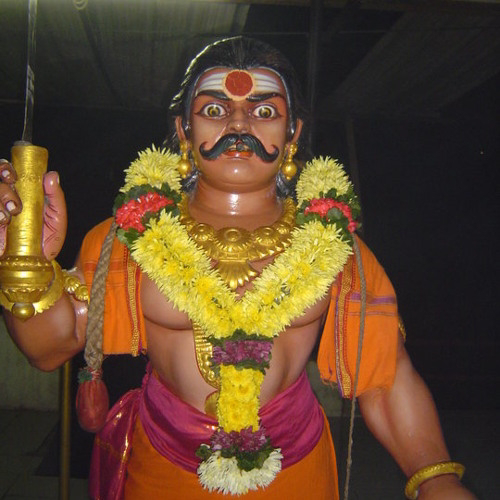
The Guardian Avatar: Muneeswaran
Lord Muneeswaran is perhaps the most famous folk avatar He is the bridge between the high flying philosophy of the Vedas and the everyday life of the common man.
He is worshipped in seven forms (Saptha Muni):
Sivamuni: The highest spiritual form.
Mahamuni: The possessor of infinite power.
Thavamuni: The master of meditation.
Nathamuni: The master of sound/music.
Jadamuni: The one with matted hair who lives in nature.
Dharmamuni: The protector of justice.
Vazhamuni: The guardian of the forest.
Including Muneeswaran in the history of Shiva is crucial because it shows that Shiva is not just a god of the elite—he is the protector of every village and every bodyguard of the common people.

The Family of Lord Shiva
One of the most beautiful aspects of Shiva is that he is the Adiyogi (the first monk) but also a family man. This teaches us that spiritual life and family life can coexist.
Goddess Parvati (Shakti)
Parvati is the daughter of the Himalayas and the reincarnation of Sati. She is the Shakti or power of Shiva. Without her, Shiva is static consciousness; with her, he becomes the creator of the universe. Their marriage is celebrated as the union of Spirit and Matter.
Lord Ganesha
The elder son, the elephant headed god. He was created by Parvati to guard her door. When Shiva, unaware, tried to enter and was stopped by Ganesha, a battle ensued where Shiva eventually gave Ganesha an elephant's head. He is the Remover of Obstacles.
Lord Kartikeya (Murugan)
The younger son, born from Shiva’s third eye sparks to destroy the demon Tarakasura. He is the Commander in Chief of the gods and is particularly beloved in Southern India as the God of War and Wisdom.
Forms and Iconography: Decoding the Symbols
Every element of Shiva’s appearance has a deep scientific and spiritual meaning.
The Crescent Moon: It represents the mind. By wearing it on his head, Shiva shows that he has perfect control over his thoughts and time.
The Third Eye: This is the eye of intuition. When it opens, it destroys the world of Maya (illusion).
The Snake (Vasuki): Most people fear snakes, but Shiva wears one as an ornament. This symbolizes that he has conquered fear and the ego.
The River Ganga: Flowing from his hair, it represents the flow of knowledge and the purification of the soul.
The Tiger Skin: Shiva sits on a tiger skin to show that he has mastered desire and animalistic instincts.
The Ash (Vibhuti): Smearing ash on his body reminds us that everything physical will eventually turn to dust. It is a lesson in humility.
The Shiva Lingam: The Infinite Form
Most people worship Shiva in the form of the Lingam. This is often misunderstood, but in Sanskrit, Lingam simply means sign or symbol.

The Lingam represents the Stambha, the infinite pillar of fire that has no beginning and no end. It is an abstract way of saying that God cannot be contained in a human shape.
The base of the Lingam (Yoni) represents the feminine energy, and the cylinder represents the masculine. Their union is the source of all life.
Worship, Rituals, and Mantras
Worshipping Shiva is known for its simplicity. He is called Ashutosh (One who is easily pleased).
Shiva is the god of water. Performing Abhishekam (pouring water or milk over a Lingam) is the most common ritual. It is said to cool the heat of Shiva's intense energy.
Bilva Leaves: These three-pronged leaves are his favorite offering. They represent the three Gunas (qualities of nature) being offered to the Lord.
Fasting: Many devotees fast on Mondays, which is the day dedicated to Shiva.
Panchakshari Mantra: Om Namah Shivaya — This five-syllable mantra is the sound of the universe. It cleanses the mind and brings peace.
Mahamrityunjaya Mantra: This is the Great Death Conquering mantra used for healing and protection from accidents.
Muneeswaran Mantra: For those seeking protection and courage, the mantra Om Ham Shree Muneeswaraya Namaha is chanted to invoke the guardian aspect of Shiva.
Temples and Sacred Sites
The 12 Jyotirlingas: These are the sites where Shiva appeared as a pillar of light. They include Kashi Vishwanath (Varanasi), Kedarnath (Himalayas), and Somnath (Gujarat).
Mount Kailash: The physical and spiritual home of Shiva in Tibet. No human has ever climbed it, symbolizing the unreachable nature of the supreme.
Munneswaram Temple (Sri Lanka): One of the oldest temples where Shiva is worshipped, specifically linking the history of the Muneeswaran avatar to the Ramayana era.
Bodyguard Muneeswaran Temple (Chennai): A modern-day marvel where thousands of people bring their new cars and bikes to be blessed by Shiva's protective form.
Major Festivals
Maha Shivaratri
The Great Night of Shiva occurs once a year. It is believed that on this night, the planetary positions are such that there is a natural upsurge of energy in the human system.
Devotees stay awake all night, keeping their spine erect through meditation to benefit from this energy.
Shravan Month
The monsoon month of Shravan is entirely dedicated to Shiva. Devotees (Kanwariyas) carry water from the Ganges on their shoulders for hundreds of miles to offer it to their local Shiva temples.
The Benefits of Shiva Worship
Mental Clarity: Meditation on Shiva helps destroy the clutter of the mind.
Removal of Fear: Shiva is the Lord of Time (Mahakala). Understanding him removes the fear of death.
Protection: Especially through his forms like Muneeswaran, he is believed to protect the home from evil spirits and evil eye.
Equality: Shiva accepts everyone, the outcasts, the animals, and the saints alike. Worshipping him promotes a sense of universal brotherhood.

Modern Relevance: Why Shiva Matters Today
The Science of Yoga: Everything we know about Yoga and Mindfulness today comes from the Yogic Science that Shiva first taught to the seven sages (Saptarishis).
Sustainability: Shiva lives in nature, wears animal skins, and avoids luxury. He is the ultimate icon for the Minimalist and Eco-friendly movements.
Mental Health: In an era of anxiety, the Om Namah Shivaya chant is scientifically proven to reduce stress and lower the heart rate.
Justice and Protection: The worship of Muneeswaran today shows our need for a guardian in a chaotic world. He represents the strength we need to face modern challenges.
The Eternal Journey
Lord Shiva is not a god who lives in the past. He is the Present Moment. Whether you see him as the silent meditator on Mount Kailash, the fierce warrior Veerabhadra, or the local guardian Muneeswaran, he represents the same truth: That within every destruction, there is the seed of a new beginning.
By understanding Shiva, we understand ourselves. We learn to destroy our bad habits, preserve our good values, and create a better life.
Related Posts
108 Munishwaran Mantras In English
108 Munishwaran Mantras In Tamil
History of Munishwaran – Origin, Meaning & Spiritual Significance
100 Powerful Lord Narasimha Mantras
Support Our Devotional Journey
This devotional space is created to share sacred mantras, divine stories, and spiritual knowledge with pure devotion and sincerity. All content is offered freely to help devotees find peace, faith, and inner strength through spirituality.
If you feel spiritually connected or benefited by our devotional posts, you may choose to support this journey. Your support encourages us to continue sharing meaningful devotional content for everyone.
DISCLAIMER
This devotional space is created to share sacred mantras, divine stories, and spiritual knowledge with pure devotion and sincerity. All content is offered freely to help devotees find peace, faith, and inner strength through spirituality.
If you feel spiritually connected or benefited by our devotional posts, you may choose to support this journey. Your support encourages us to continue sharing meaningful devotional content for everyone.
The content published in this post, including mantras, meanings, benefits, and spiritual explanations, is shared solely for devotional, educational, and informational purposes. The information is based on traditional beliefs, commonly available spiritual references, and AI assisted content generation.
While every effort is made to present the content respectfully and accurately, the author does not claim absolute correctness or completeness of the information. This content does not guarantee any specific results and must not be considered professional advice, including medical, psychological, legal, financial, or astrological advice.
The author and publisher shall not be held responsible or liable for any direct, indirect, incidental, or consequential outcomes arising from the reading, interpretation, or practice of the content shared here.
Spiritual outcomes and personal experiences may vary based on individual faith, intention, discipline, and belief. Readers are advised to apply their own judgment and discretion while following any devotional or spiritual practice.
By accessing or using this content, you acknowledge and agree that you are solely responsible for your interpretations, actions, and decisions.




Comments
Post a Comment