Keep your private life private.
Store passwords, IDs, documents and private information securely on your phone. No cloud. No tracking.
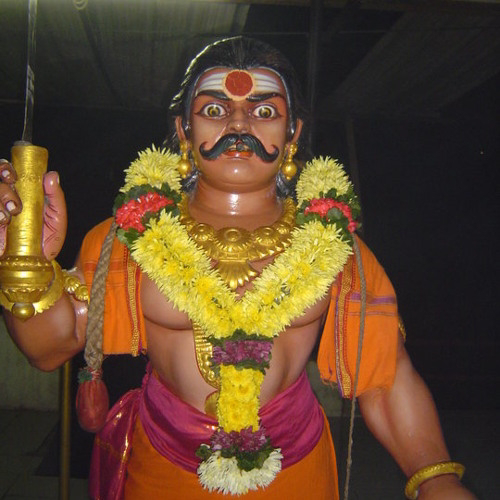
He is well thought out as a form of Shiva. He is worshiped as a family deity in most Shaivite families. According to Hindu mythology, God Munishwaran is considered as a form of Lord Shiva.

The cult of Munishwaran is very popular in various regions of India, Malaysia as well as Singapore. The main weapon of God Munishwaran is trident and so temples usually contain a trident placed on the ground and limes are also placed on the prongs of trident.
Statues of God Munishwaran are painted and are dressed in dhoti. Lord Munishwaran is considered both as fierce God as well as peaceful God.
At this Lord Shiva got angry and before the Yagam could end, the anger exploded. Then Lord Shiva’s guard, Veeera Pathirar appeared from the Yagam. And Lord Munishwaran came out form Lord Shiva’ face in order to protect the souls.
By assuming seven different incarnations, God Munishwaran bestowed his blessings to His devotees.
It is believed in Hindu mythology that praying to lord Munishwaran will lead his devotee to achieve bliss and maintain a good health throughout life.
As he appeared from Lord Siva’s face. He believed Sivamuni.
Possessing immense divine power he became Mahamuni.Related Posts
108 Munishwaran Mantras In English
108 Munishwaran Mantras In Tamil
History of Munishwaran – Origin, Meaning & Spiritual Significance
100 Powerful Lord Narasimha Mantras
100+ Muniswaran Song Lyrics & MP3
Support Our Devotional Journey
This devotional space is created to share sacred mantras, divine stories, and spiritual knowledge with pure devotion and sincerity. All content is offered freely to help devotees find peace, faith, and inner strength through spirituality.
If you feel spiritually connected or benefited by our devotional posts, you may choose to support this journey. Your support encourages us to continue sharing meaningful devotional content for everyone.
DISCLAIMER
This devotional space is created to share sacred mantras, divine stories, and spiritual knowledge with pure devotion and sincerity. All content is offered freely to help devotees find peace, faith, and inner strength through spirituality.
If you feel spiritually connected or benefited by our devotional posts, you may choose to support this journey. Your support encourages us to continue sharing meaningful devotional content for everyone.
The content published in this post, including mantras, meanings, benefits, and spiritual explanations, is shared solely for devotional, educational, and informational purposes. The information is based on traditional beliefs, commonly available spiritual references, and AI assisted content generation.
While every effort is made to present the content respectfully and accurately, the author does not claim absolute correctness or completeness of the information. This content does not guarantee any specific results and must not be considered professional advice, including medical, psychological, legal, financial, or astrological advice.
The author and publisher shall not be held responsible or liable for any direct, indirect, incidental, or consequential outcomes arising from the reading, interpretation, or practice of the content shared here.
Spiritual outcomes and personal experiences may vary based on individual faith, intention, discipline, and belief. Readers are advised to apply their own judgment and discretion while following any devotional or spiritual practice.
By accessing or using this content, you acknowledge and agree that you are solely responsible for your interpretations, actions, and decisions.




Comments
Post a Comment